
Currency Exchange Rates: How FX Prices Are Determined
Table of Contents
- The Mechanics of Currency Exchange
- Floating vs. Fixed Exchange Rate Regimes
- The Primary Drivers of FX Volatility
- Theoretical Frameworks for Price Determination
- The Role of Central Bank Intervention
- Market Execution: Spreads and Liquidity
- Managing Currency Risk in Business and Trading
- Frequently Asked Questions
- Final Analysis
The Mechanics of Currency Exchange
Consider a US-based importer sourcing luxury leather goods from Italy. To settle invoices with their supplier, the importer must sell US Dollars (USD) and acquire Euros (EUR). If the Euro appreciates by 5% between the order date and the payment deadline, the importer’s cost basis rises instantly, directly eroding profit margins. This scenario illustrates the fundamental nature of currency exchange: every price is a relative valuation between two competing sovereign assets.
In the foreign exchange (FX) market, currencies are exclusively traded in pairs, such as EUR/USD or USD/JPY. The first currency listed is the base currency, while the second is the quote currency. A EUR/USD exchange rate of 1.08 indicates that one Euro is valued at 1.08 US Dollars. When analysts describe a currency as strengthening, they are observing an increase in demand for that specific asset relative to its paired counterpart.
Unlike the New York Stock Exchange (NYSE) or the Nasdaq, the FX market is a decentralized, over-the-counter (OTC) global network. It consists of a hierarchy of participants, including Tier-1 banks, prime brokers, hedge funds, and institutional investors. Prices are not set by a central authority but are determined by a continuous, high-frequency flow of orders across the interbank market. This environment creates a complex interplay of macroeconomic forces, mathematical anchors, and psychological triggers that dictate price action.
Quick Facts
| Feature | Detail |
|---|---|
| Market Structure | Decentralized / Over-the-Counter (OTC) |
| Primary Drivers | Interest rate differentials, GDP, geopolitical stability, trade balances |
| Key Instruments | Spot FX, Forwards, Futures, Options |
| Liquidity Profile | Highest of any global financial market |
| Risk Profile | High (significantly amplified by leverage) |
Floating vs. Fixed Exchange Rate Regimes
The process of price discovery varies significantly depending on the monetary regime adopted by a nation’s central bank. These regimes dictate how a currency reacts to external shocks and internal policy shifts.
Floating Exchange Rates
In a floating regime, the exchange rate is determined solely by market supply and demand. The majority of G10 currencies, including the USD, EUR, and GBP, operate under this system. Prices fluctuate in real-time, reacting to economic data releases, geopolitical news, and shifts in trader sentiment. For instance, if the Federal Reserve signals a more aggressive hawkish stance to combat inflation, the USD typically appreciates as global investors seek the higher yields associated with US assets.
Fixed (Pegged) Exchange Rates
Certain nations choose to anchor their currency value to another major currency or a weighted basket of assets. This strategy is typically employed to stabilize international trade or to mitigate the risk of hyperinflation. The Hong Kong Dollar (HKD) is a prominent example, as it is pegged to the USD. The Hong Kong Monetary Authority (HKMA) maintains this peg by actively buying or selling USD reserves to ensure the HKD remains within a strictly defined trading band.
Managed Float (Dirty Float)
A managed float is a hybrid approach where a currency is technically floating, but the central bank intervenes to prevent excessive volatility or misalignment. The Japanese Yen (JPY) often follows this pattern. The Bank of Japan (BoJ) may allow the Yen to depreciate to maintain the competitiveness of Japanese exporters. However, if the depreciation becomes disorderly or threatens economic stability, the BoJ will enter the market to buy Yen and sell USD, effectively putting a floor under the currency’s value.
The Primary Drivers of FX Volatility
Currency movements are rarely random. They are the result of specific macroeconomic catalysts that alter the relative attractiveness of holding one currency over another.
Interest Rate Differentials
Interest rates represent the cost of capital and the return on liquidity. When a central bank raises its benchmark rate, it increases the yield on assets denominated in that currency, such as government bonds. This creates a magnet for foreign capital, increasing demand for the currency and driving up its price.
Take the USD/JPY pair as a case study. If the Federal Reserve raises rates while the Bank of Japan maintains a negative or zero-interest-rate policy (ZIRP), investors will sell Yen to purchase Dollars. This allows them to invest in higher-yielding US Treasuries. This capital flight from low-yield to high-yield environments pushes the USD/JPY exchange rate higher.
Economic Indicators and GDP Growth
Robust economic growth attracts foreign direct investment (FDI) and portfolio investment. High GDP growth, low unemployment rates, and strong industrial production figures signal a healthy business environment. Because investors must acquire the local currency to purchase stocks, bonds, or real estate in a growing economy, strong economic data generally provides fundamental support for a stronger currency.
Geopolitical Stability and Safe Havens
During periods of global systemic risk or geopolitical turmoil, market participants rotate out of risk-on assets—such as emerging market currencies—and into safe-haven assets. The US Dollar, Swiss Franc (CHF), and Japanese Yen have historically served this role. During a sudden shock, these currencies often appreciate regardless of their current interest rate levels, simply because they are perceived as the most secure repositories of capital.
Trade Balances and Current Account
A country maintaining a significant trade surplus—exporting more than it imports—generates a structural demand for its currency. Foreign buyers must sell their own currency to buy the exporter’s currency to settle trade contracts. Conversely, a chronic trade deficit can create downward pressure on a currency, as the country is effectively selling its own currency to finance the purchase of foreign goods and services.
Theoretical Frameworks for Price Determination
While short-term volatility is driven by news and sentiment, long-term valuations are often analyzed through established economic theories.
Purchasing Power Parity (PPP)
Purchasing Power Parity suggests that in the long run, exchange rates should adjust so that an identical basket of goods costs the same in two different countries when expressed in a common currency. This is famously illustrated by the Big Mac Index. If a burger costs $5 in the US and the equivalent of $7 in the UK at current market rates, PPP suggests the GBP is overvalued and should eventually depreciate to restore equilibrium.
While PPP is an unreliable tool for short-term tactical trading, it is highly valued by analysts to determine if a currency has drifted too far from its fundamental fair value over a multi-year horizon.
Interest Rate Parity (IRP)
Interest Rate Parity is a more technical framework linking spot exchange rates with forward exchange rates. It posits that the difference in interest rates between two countries should equal the difference between the spot and forward rates.
If the US offers a 5% yield and the EU offers 2%, the forward rate for EUR/USD should trade at a discount to reflect this gap. If this equilibrium is broken, an arbitrage opportunity emerges. A trader could borrow in the low-interest currency, convert it to the high-interest currency, invest it, and simultaneously lock in a forward contract to convert it back at a future date. This would effectively generate a risk-free profit. In efficient markets, institutional arbitrageurs close these gaps almost instantaneously.
The Role of Central Bank Intervention
Central banks are the most influential actors in the FX market. Beyond setting interest rates, they possess the tools to actively manipulate currency values to meet specific policy objectives.
Direct Market Intervention
A central bank can physically enter the open market to buy or sell its own currency. If the Euro becomes too strong, making European exports prohibitively expensive for global buyers, the European Central Bank (ECB) may sell Euros and buy USD or JPY. By increasing the supply of Euros in the global system, the ECB puts downward pressure on the exchange rate.
Verbal Intervention (Jawboning)
Central banks can often move markets without spending their foreign exchange reserves. Jawboning occurs when officials use public statements to shift market expectations. If a central bank governor suggests that the current exchange rate is misaligned or that volatility has become excessive, traders may preemptively adjust their positions. This moves the price in the desired direction based on the expectation of future action.
Quantitative Easing (QE) and Liquidity
When a central bank implements Quantitative Easing, it creates new money to purchase government bonds and other financial assets. This increases the overall supply of the currency within the financial system. An oversupply of currency, coupled with the lower bond yields that typically accompany QE, generally leads to a depreciation of the currency relative to peers who are not engaging in such expansionary policies.
Market Execution: Spreads and Liquidity
For the corporate treasurer or the retail trader, the market price is not a single figure but a range defined by liquidity.
The Bid-Ask Spread Mechanism
Every currency pair is quoted with two prices: the Bid and the Ask. The Bid is the price the market is willing to pay to buy the asset from you, while the Ask is the price the market charges to sell the asset to you. The difference between these two is the spread.
In highly liquid pairs like EUR/USD, the spread is typically razor-thin. In exotic pairs, such as USD/TRY (Turkish Lira), the spread can be significantly wider. A wide spread increases the cost of entry and exit and usually signals lower liquidity or heightened perceived risk in that specific currency.
Liquidity and Slippage
Liquidity refers to the ability to execute a trade without causing a significant move in the price. During high-impact news events—such as the US Non-Farm Payrolls (NFP) report—liquidity can evaporate instantly. This results in slippage, where an order is executed at a price significantly different from the requested quote. Professional traders mitigate this risk by utilizing limit orders rather than market orders during periods of extreme volatility.
Risk Warning: High liquidity does not equate to low risk. In the FX market, the use of leverage can transform a minor price fluctuation into a total loss of capital if strict stop-loss orders are not enforced.
Managing Currency Risk in Business and Trading
Given the constant fluctuation of FX prices, entities with international exposure must employ sophisticated strategies to protect their balance sheets.
Hedging with Forward Contracts
A forward contract is a customized agreement to exchange a specific amount of currency at a predetermined price on a future date.
Example: A US importer knows they must pay €1 million in 90 days. To eliminate the risk of the Euro strengthening, they enter a forward contract to buy EUR at 1.10. Even if the spot rate climbs to 1.15 by the payment date, the importer is locked in at 1.10, ensuring their cost of goods sold remains predictable and their margins are protected.
The Carry Trade Strategy
The carry trade is a staple strategy for hedge funds and institutional speculators. It involves borrowing capital in a currency with a low interest rate (the funding currency, such as the JPY) and investing those funds in a currency with a higher interest rate (the target currency, such as the AUD or USD).
The trader profits from the interest rate differential, known as the positive carry. However, this strategy is exposed to significant currency risk. If the funding currency appreciates sharply, the cost of repaying the original loan can exceed the interest earned, triggering a carry trade unwind. This often leads to sharp, cascading market crashes as traders rush to close their positions.
Diversification and Correlation
Sophisticated portfolios avoid holding multiple currencies that exhibit high positive correlation. For example, the Australian Dollar (AUD) and Canadian Dollar (CAD) are both commodity currencies, heavily influenced by the price of raw materials and energy. Holding both does not provide true diversification; instead, it concentrates exposure to a global slowdown in industrial demand.
| Strategy | Primary Goal | Key Risk |
|---|---|---|
| Forward Contract | Price Certainty | Opportunity cost if spot rate moves favorably |
| Carry Trade | Yield Generation | Sudden appreciation of funding currency |
| Diversification | Risk Reduction | Correlation between commodity currencies |
Frequently Asked Questions
How are currency exchange rates calculated?
Exchange rates are not derived from a static formula but are discovered through continuous global trading. In a floating system, the rate represents the equilibrium point where the volume of buyers equals the volume of sellers for a specific pair at any given microsecond.
What causes a currency to depreciate?
Depreciation occurs when the demand for a currency falls or its supply increases. Primary catalysts include the lowering of benchmark interest rates, rising inflation (which erodes purchasing power), political instability, or a widening current account deficit.
Why do exchange rates change every second?
The FX market is the most liquid financial market in existence, operating 24 hours a day. New information—ranging from a central banker’s comment to a revised GDP figure or a shift in global risk appetite—is priced in instantly by algorithmic trading systems and institutional desks.
When is the best time to exchange currency?
While there is no perfect timing, liquidity is at its peak when major financial hubs overlap. The window when the London and New York markets are both open is typically the most liquid, offering the tightest spreads and the most efficient price discovery.
Can inflation affect exchange rates?
Yes. Generally, high inflation erodes the purchasing power of a currency, making it less attractive to hold relative to currencies with lower inflation. Over the long term, countries with consistently higher inflation rates tend to see their currencies depreciate.
Is the mid-market rate the same as the retail rate?
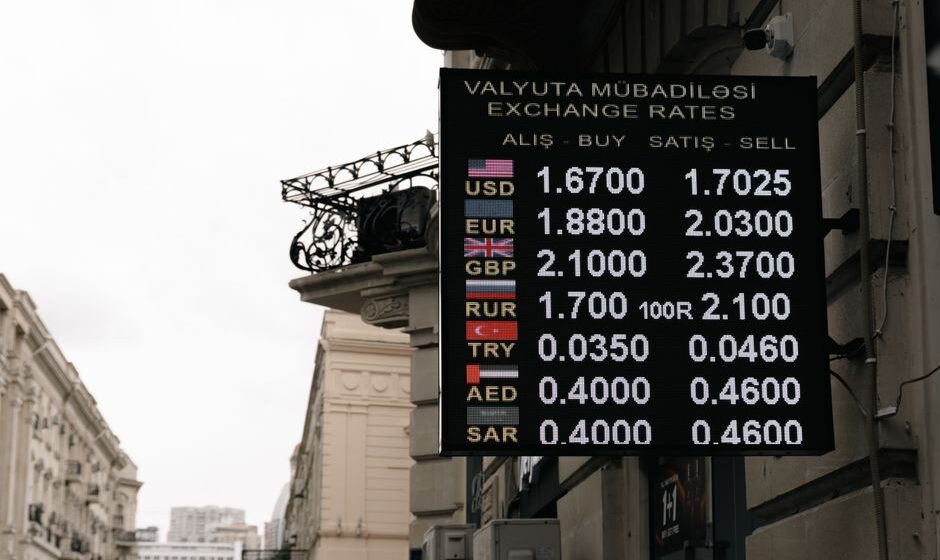
No. The mid-market rate is the exact midpoint between the buy and sell prices in the interbank market. Retail rates offered by commercial banks or currency kiosks include a markup or commission, meaning the consumer always receives a rate slightly worse than the true market value.
Final Analysis
Mastering the nuances of currency exchange requires a shift in perspective: it is not merely about swapping one currency for another, but about analyzing global macroeconomics. Exchange rates are the real-time reflection of a nation’s economic health, its monetary policy, and its perceived stability relative to its global peers.
For the investor, the critical takeaway is that FX is a game of relativity. No currency is inherently strong or weak in a vacuum; it is only strong or weak compared to another. Whether you are hedging operational costs for a business or speculating on a central bank’s interest rate pivot, the key is to monitor the spread between monetary policies and the resulting flow of global capital.
As a practical application, begin tracking the correlation between 10-year government bond yields and the corresponding currency. The bond market frequently serves as a leading indicator for FX movements. Always maintain a disciplined approach to risk management; the FX market is highly volatile, and one should never risk a significant percentage of their total capital on any single currency pair.
—
This article is for educational purposes only and does not constitute investment advice. Trading and investing carry a significant risk of loss; never invest more than you can afford to lose. There are no guaranteed returns in foreign exchange trading.
Editorial Byline: Senior Financial Editor
Last reviewed: August 2026